|
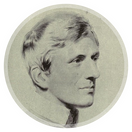
We are a church with a heart for the community. Our vision is to be a church that embodies the love of Christ in our community in the 21st century. We share this vision with the founder of our church, John Henry Newman, who had real pastoral heart for the people of Littlemore and who was also one of the main theologians of the 19th century Oxford Movement. Our aim is to enrich the spiritual life of the congregation and build bridges to those in the wider community through working creatively with the locals school, the mental hospital, other churches and various agencies.
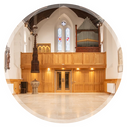
This is an exciting time in our church life as we are prayerfully discerning God’s call to us to work with families, the arts, the mentally ill, the elderly and the many visitors we are anticipating following the beatification of Newman. We anticipate that doing something with our building as at the moment we lack basic modern facilities. As you read this please pray with us our community prayer:
Loving Lord, may your shining light fill the hearts of all who live, work and worship here in Littlemore.’
|
Martyrs and Bullies
On the morning the invitation came to write this, my newspaper contained two interesting stories. The first was about a group of German lawyers and thinkers called the Kreisau circle who had opposed Hitler. Some of them paid for it with their lives. Some were Catholics, other Lutherans, but they were all motivated by a deep Christian faith. The last survivor of the group, the Countess von Moltke, had just died in her great old age. The other story was headed, ‘Bullied clergy turn to trade union for protection’. It was a stark contrast. Some Christians apply their faith to their daily lives, others don’t. Some are martyrs, others are bullies.
It is easier to reject people and deny things in the name of Christianity than to make commitments which may be very costly. There are no women bishops in the Bible. St Paul didn’t write in modern English. It is difficult to follow the timeless way of Christ through a world which has changed so much. Change can be expensive. Many American Christians seem more worried about protecting their health insurance packages than applying Our Lord’s teaching about the needs of the poor, while millions of people effectively have no health cover.
Just before the Nazis hanged him, Count von Moltke wrote to his wife, ‘I would gladly go on living and accompany your further through this life. But then I would need a new task from God. The task for which God made me is done.’ As a young curate, I was shown the prison chamber in Berlin where Moltke and many other heroes of the resistance were executed. I found it humbling and challenging. But on reflection, I saw that the teaching of Christ applied less heroically to ordinary lives like mine. Those who accept or reject that teaching are not necessarily great saints or villains. We all have a duty of love towards God and our neighbour. If we listen to the New Testament and pray about it, we know where to begin.
John Lewis |
|
Please pray for the Copts in Egypt
We have a connection with the Coptic church through an Egyptian surgeon Dr Morkos Fakhry, who lives in Littlemore. He writes:
"Please pray for the Coptic Christians in Egypt as they are going through extremely hard time after yet another awful terrorist attack. Muslim fanatics opened fire randomly on Christian crowds after celebrating their Christmas Eve mass outside the church killing 6 and injuring 9. This was followed by damaging, looting and burning several houses and shops belonging to Copts, some people were asphyxiated inside their houses."
|
|
John 2.1-11: The Wedding at Cana
The gospel for the Second Sunday after Epiphany continues the Epiphany theme of Revelation. Today, Jesus reveals his glory through his first sign, or miracle, and his disciples believe in him.
St. John doesn’t tell many stories like this. Compared with the other gospels, his Jesus reveals himself more through speeches - discourses - and less through actions. But when John does tell a story, he does it beautifully. The Wedding at Cana glows like a jewel on the page: vivid, colourful, and full of light.
It’s evidently a big wedding. A lot of guests. Not only are Mary and her son invited, but all her son’s friends too. These are generous people. But not rich, presumably. They might be craftsmen, or fishermen, or farmers - ordinary people of Galilee. And in the middle of it all, there are two young people starting out in life, on their big day. How humiliating when the wine runs out.
We might wonder in passing why the wine has run out. Has the supplier cheated the family? Have more people come than expected? You can imagine the bride’s parents, working out how much they could afford, how much everyone might be expected to drink - and to their shame, underestimating.
Word starts to spread. And Mary feels for them terribly. She goes to her son and says, ‘Do something!’ He might have said, ‘What am I, a wine dealer?’ But he knows what she means, and he doesn’t want to perform a miracle. He says, ‘My hour has not yet come.’
Which is a strange thing to say, in a way. Because at this point, Jesus has already been recognized by John the Baptist. He has begun to attract followers. After the wedding, he will go to Jerusalem and make himself conspicuous by overturning the money-changers’ tables in the Temple. Surely his hour has at least begun.
But in this season of revelation, one of the major themes - paradoxically - is how reluctant Jesus is to reveal himself in what seems like the most obvious way, by signs or miracles. And this is a theme which runs through all four gospels. Jesus nearly always performs a miracle only because someone comes to him in extreme need, and asks him - begs him - argues with him. And often he tells them afterwards to keep it a secret.
It seems almost perverse. But the problem with signs and miracles, is that they reveal the greatness of Jesus in the wrong way. For a start, they are ‘proof’ that Jesus is the Messiah. According to the gospels, that’s exactly what a lot of people in Jesus’s generation are looking for: a provable Messiah, one who does signs. But for Jesus, to look for signs is to make a fundamental mistake.
You don’t recognize the Messiah because he proves himself to you. You recognize the Messiah because you love God. That love makes you sense the presence of God, even when God is veiled in human form. If you want proof before you accept that God is with you, then your heart’s not really in the relationship.
The other problem with signs is that they focus too much attention on Jesus himself, when Jesus is trying to point away from himself to God. Jesus describes himself in John’s gospel as the way to God and the lamp that lights the way; the shepherd of God’s sheep and food for their journey. He isn’t looking for glory for himself, in this life. He wants people to look and listen and travel through him, to God.
It’s a battle which all four gospels show Jesus losing. Because of his teaching, his miracles, his nature, people do focus on Jesus and think more about their relationship with him than with God. And then, if he turns out not to be the kind of Messiah they were hoping for, they sometimes reject or turn against him.
No wonder Jesus doesn’t want to perform a miracle at Cana. But Mary is adamant: you have to help these people. And as so often, Jesus is overcome by his compassion for people in need, and helps them. We never hear whether the steward, or the families, even suspect that a miracle has taken place. But the disciples know it, and their reaction is exactly the one that Jesus does not want. They recognize a sign, a glimpse of Christ’s glory, and they believe.
In a way, this story is a cautionary tale. When the Word of God is made flesh, as it is in Christ, it is all too easy to be impressed by the flesh and forget God. But Jesus reminds us that even the greatest miracle-worker - even the Messiah - is only pointing the way. The words they speak, the glory they reveal is never theirs, but God’s. It is to God that they ask us to give our faith and love.
This story - indeed, any miracle story - also has a particular resonance for us this week. In the wake of the catastrophe in Haiti, the media have been asking, as they always do in these situations: How can a loving God let this kind of thing happen? How can anyone believe in a loving God when this kind of thing happens?
I think it was A. C. Grayling who was on the Radio Four the other day, saying that natural disasters show how silly it is to believe in God. He said that to imagine that a loving God would make a world in which people could get hurt, is like imagining that loving parents would make a home in which children could get hurt.
It struck me as a remarkably self-defeating claim, because our homes are full of things that can hurt children! We have appliances that can burn you or scald you or electrocute you or give off poisonous gases. We have flexes that children can fall over and stairs they can fall down and trees they can fall out of. Homes are lethal places! But we don’t think that means that parents don’t love their children. We recognize that all the good things about a home which keep us fed and clean and warm, can also sometimes be dangerous, and we teach children to treat them with respect.
Perhaps the same is true of our world. The things which give us life and make it a wonderful place to live, can also sometimes be dangerous. We aim to learn to live with them, and teach our children to live with them, in respect. Sometimes, tragically, we get it wrong. We get it wrong.
When people say, how can a loving God let disasters happen, they are saying, effectively, give us a sign. If God exists and loves us, prove it in terms that compel our belief, here and now. And again tomorrow. Because it wouldn’t be enough for God to just prove God’s love two thousand years ago, or again today. God would have to go on proving it every day for the rest of time by never letting any bad thing happen to anybody, ever.
Today’s gospel reminds us that God doesn’t work like that. God can’t work like that, because love doesn’t work like that. Human beings are very often like immature lovers, demanding, ‘Do you love me? Prove it! Prove you’ll never let anything bad happen to me!’ But it can’t be done. You can only prove love by giving it, and accepting it, and living it.
At Cana, as so often, Jesus was a reluctant miracle-worker. He knew that signs are not the currency of grace. The only proof of love, is love itself. The only proof of God, is the glory that transfigures everything we look at with the eyes of love and faith.
Amen.
Teresa Morgan |
|
Archbishop Rowan Williams on Copenhagen 7-18 December
We can, and we should, pray. Climate change is not only an environmental issue – probably the most important we face; it is also an issue of justice. As usual the poorest are likely to suffer the most, though the richest have contributed most to pollute the atmosphere and accelerate global warming. So we can pray that a proper sense of responsibility (not least to the generations who will follow us) and of justice, guides the hearts and the minds of the politicians who will meet in Copenhagen.’
‘Let us do what we can do get involved in the preparations for Copenhagen. There will be activity, lobbying and hard thinking going on in civil society as well as government in preparation for the Climate Summit. Many faith groups and civil society organisations (and that includes the Church of England), will be organising events to heighten awareness of the issues and opportunities which the summit brings.’
‘I shall be going to Copenhagen to support those and to emphasise the strength of the concern that people of faith have for the future well-being of our planet.’
‘Please pray for all whose efforts could make a real difference for the sustainability of our planet and we who live in it – it is God’s creation that we are striving to care for and as God’s children that we pray and act.’
+ Rowan Williams
Climate change. What are we going to do about it?
Sue Feltham
I‘d like to introduce (to the best of my ability) the concept of climate change, explain why it is an important issue, and what the consequences are. I’d also like to outline what is being done internationally, nationally, in Oxfordshire, and here in Littlemore.
What is climate change?
To a certain extent climate change occurs naturally over long periods of time. Today, however, we face an unprecedented crisis of climate change. In 2007 the Intergovernmental Panel for Climate Change, (IPCC), comprised of 640 experts from 40 different countries confirmed that temperatures around the World are rising quickly, and the popularly accepted theory is that the rise is catalysed by greenhouse gasses.
What are the consequences?
The ice caps at the Poles are melting, sea levels are rising, and the weather, particularly around the equator and the tropics is changing. We could see significant irreversible changes to huge areas of land within ten years.
What is being done internationally?
In 1997 the UN framework convention on climate change was founded and the Kyoto Protocol (an environmental treaty aimed at stabilising the emission of greenhouse gasses) was created. In October 09, 184 nation states had signed up to the treaty. This month the states are meeting in Copenhagen to discuss what measures are relevant for the situation today. At the time of writing, we are expecting a set of proposals for further talks. Britain, is, however leading the way, and has legally binding targets for cutting carbon emissions significantly by 2020. We are going to see big changes.
What are we doing in Oxfordshire?
People have got together. Oxfordshire has a wealth of groups dedicated to helping people reduce their carbon footprint, either directly, e.g. specialising in heat efficiency, or indirectly, by lobbying on green issues, or educating people to appreciate and work with nature. Central to their ethos is encouraging a sense of sustainable community.
What are we doing in Littlemore?
I have yet to learn what we are doing in Littlemore, but I know that John Henry Newman school has a level 1 eco warriors award. I strongly suspect that the children will be our teachers. Littlemore also has a lively allotment community, with more people than ever starting to grow their own fruit and vegetables. It’s not just about saving a bob or two during the recession, it also teaches you about the seasons, and the bounty of nature. Here at the Church, we’ve been clearing the church yard, and are actively taking steps to encourage birds and wildlife in a managed and way. We also want to tell you all about it. In a city, churchyards are one of the few large undisturbed places for wildlife, so this is a sacred place to come close to nature.
|
|
Deacon Jack Sullivan
On 13th November 2009 a very special visitor came to our church. All the way from Boston, Massachussetts, Deacon Jack Sullivan, 71, had already visited the Oratory in Birmingham, had stayed at Newman`s college in Littlemore and was en route to Oriel College for lunch, when he spent approximately an hour here at the church.
So who is Jack Sullivan? This is the man who was `miraculously` cured following his intercessions with John Henry Newman. Jack was suffering from extreme back pain, he was facing the possibility of extended debilitating medical intervention and contemplating the prospect of not completing his studies towards ordination. His almost immediate, inexplicable relief from pain was subsequently recognized as the miracle which brings the beatification of Newman one step closer. Indeed, with the possible visit of Pope Benedict to Britain in September 2010, there is great speculation that the official pronouncement will be made then.
Jack Sullivan came across as a very gentle, ordinary man whose prayer to Newman in 2000 had been quite simple “Please Cardinal Newman help me to walk so that I can return to my classes and be ordained”. He told us that after this prayer - for one whole year - he was pain free and managed to return to his studies. Then the very day after the last class, the pain returned. Being told he was `on the brink of complete paralysis` he went into hospital for an operation and after it, was barely able to move and still in incredible pain: he repeated his prayer. Once again the pain left him and he went on to be ordained Deacon on Holy Cross Day in 2002.
Jack explained what happened to him the last time he prayed:
`suddenly I felt a tremendous sense of heat, very very warm and a tingling feeling all over my entire body. It was very strong and lasted for a long time. I also felt a sense of joy and peace that I had never experienced before in my life and a sense of God`s presence and I had no willpower of my own. I was just standing there and all these things were happening to me. I had no control and then I developed a sense of confidence and determination that finally I could walk, without even taking a single step.`
Later doctors studying his case determined Jack had regained the lifting capacity of a 30 year old. They were baffled by his recovery and after tests admitted they had no explanation for it.
We were very honoured that ours was the only Anglican church Jack had been inside since his arrival and all the more pertinent that it was the one Newman founded!! It was a truly unique and moving moment when he asked to stand in Newman`s pulpit and address us…his eyes glistening as he recalled the events of that awful time in his life and the `miracle` which transformed his future. He also talked about happiness: `If we are connected to the source of our love, giving God true credit (for it), then we`ll always be happy`.
Whilst at the Oratory in Birmingham he also reflected:
`people today want to decide for themselves what is right and wrong. They want to be self-sufficient, rather than attribute to God what is His. This kind of self-sufficiency can lead to great evil. So the beatification is a way of reminding people that God is God, our Creator, and he wants to draw us to himself.`
Jack and his wife Carol met some of the children who attended from Cardinal Newman School, members of our congregation and clergy. Many photos taken and interviews done – one appearing in last week`s Oxford Mail. In due course we will be able to access the official photographs taken by Fr. Lewis from the Birmingham Oratory, so watch this space!
Sue Aldridge, Churchwarden |
|
Little Marsh: A Parish Year, by Teresa Morgan, is a collection of reflections on Littlemore parish life through the Church year - more...
The book is available from Revd Margreet Armitstead at Littlemore Vicarage, or from teresa.morgan@oriel.ox.ac.uk, price £5 + p&p (cheques made payable to ‘Littlemore PCC’). All proceeds go to the work of the parish. |
|
|
|